WORLD FUTURE FUND
https://www.worldfuturefund.org
INTRODUCTION DESCRIPTION CITIZEN
GUIDES READING
LIST SITE
INDEX
REPORTS NEWS MULTIMEDIA
SEARCH HOW
TO CONTRIBUTE
HELP WANTED
VOLUNTEERS
GRANTS
PUBLICATIONS
PRINCIPLES COPYRIGHT
NOTICE CONTACT
US
GLOBAL RELIGIOUS REVOLUTION
GLOBAL GEOPOLITICAL REVOLUTION
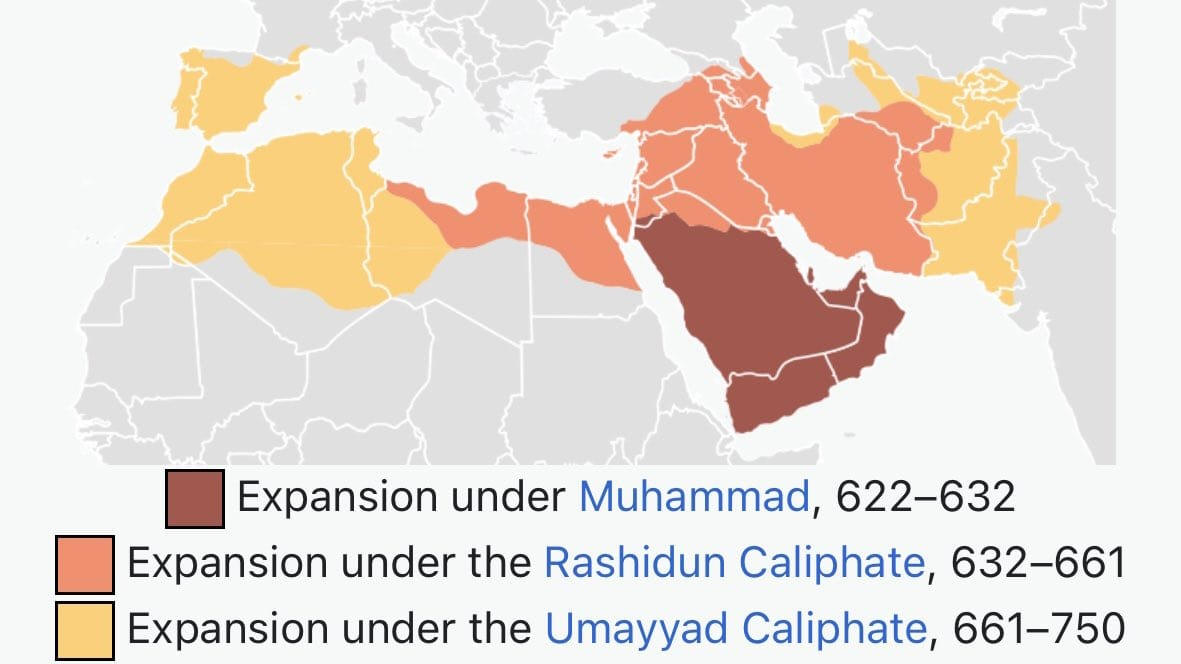
Caliph Omar is without a doubt one of the greatest leaders in world history. It was under his leadership that Islam became a world empire. He successfully defeated two of the three greatest military powers on earth. He defeated the Byzantine Empire and took its key provinces in Egypt, Palestine, Syria and the Levant. To the north he did what the Roman Empire was unable to do for hundreds of years. He completely obliterated the Sassanid Persian Empire. He wiped it off the map. The end result was that Islam under his rule became a world power and remain so for about 1000 years
After the death of Muhammed, Umar became a key figure in
the creation of the caliphate. He was able to successfully maneuver through
early Islam’s tense political situation and set up Abu Bakr to become the first
caliph of the Rashidun Caliphate. Once Abu Bakr passed away, Umar became the
caliph and forged a new path for the Ummah – one of tolerance, abundance, and
prosperity.
He soon realized however that he would need a way to
administer his new empire, and since the Arabs did not know how to build an
administrative system, he decided to keep the Roman and Persian system intact,
and have it staffed by the same Roman and Persian bureaucrats as before. These
Persian and Roman bureaucrats would run the day to day aspects of the
administrative system overseen by the Muslims. This was key to the success of
Umar’s caliphate; by giving his conquered subjects autonomy, he could keep them
content with their positions, keep the empire running, and give himself and the
Arabs the time and energy needed to continue their conquests.
Starting under Umar’s rule, people who practiced religions other than Islam were given much more rights and freedoms under the caliphate as compared to when living under their previous empires. Christians and Jews, who had been persecuted during Roman and Persian rule, were given the right to practice their religions undisturbed, and were given the right to free trade – they were not forced to abide by Islamic trade law and instead could trade in accordance with Christian and Jewish law. Non-Muslims living in the caliphate were called dhimmi, which translates to “protected person,” since the state would protect them and their right to practice their religions if they accepted the Pact of Umar if they paid a small tax This idea of religious freedom was a key reason why the Islamic caliphates lasted as long as they did.
Christian rule had been an endless reign of terror and persecutions, often aimed at other Christians. The arrival of Islam under Caliph Omar was seen as a liberation.
Caliph Umar is not only one of the most important Muslims,
but also one of the most important pioneers in history. He expanded the
caliphate and spread Islam across Asia, but not to the detriment of his
conquered subjects. He was one of the first leaders in history to promote state
protected religious freedom. Umar serves as an example of how governing fairly
is simply good policy.
Articles:
Reports on
Islam – World Future Fund
The Preservation of Jerusalem: A legacy of the Caliph Umar
Videos:
The
Inspiring Story of Umar Ibn Khattab (RA) | Dr. Omar Suleiman
Omar
Ibn Al Khattab (ra): The Convert Who Changed The World | The Firsts | Dr. Omar
Suleiman
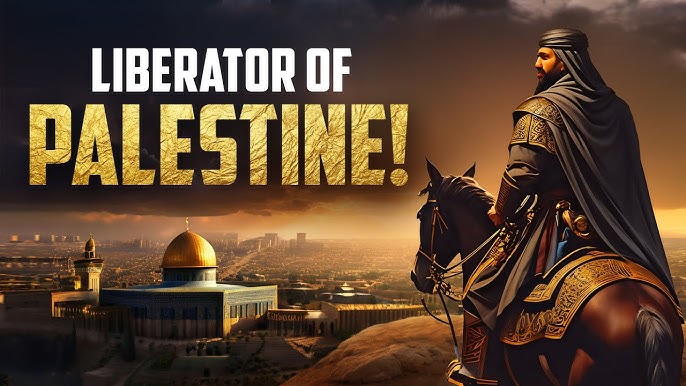
UMAR LIBERATED PALESTINE
FROM THE TYRANNY OF THE BYZANTINE EMPIRE IN 638 AD
A GLOBAL SUPER POWER IS CREATED
THE RISE OF THE ISLAMIC CALIPHATE